This particular product is recommended for protecting the laminate below the waterline, especially for repairing laminate affected by osmosis. Epoxy HS primer is a thick-layer epoxy primer designed to repair hull bottom damage.
The product is non-solvent-based, which means it does not contain solvents that could react with substances present in laminate damaged by osmosis, for example. Osmosis repair is a specific process that requires not only the right primer but also proper preparation and repair conditions. The product cures in 24 hours at around 20ºC.
| Capacity | Code | |
|---|---|---|
| set (primer + hardener) | 750 ml | 5075 |
| primer | 4,5 l | 5149 |
| hardener | 3 l | 300004211 |
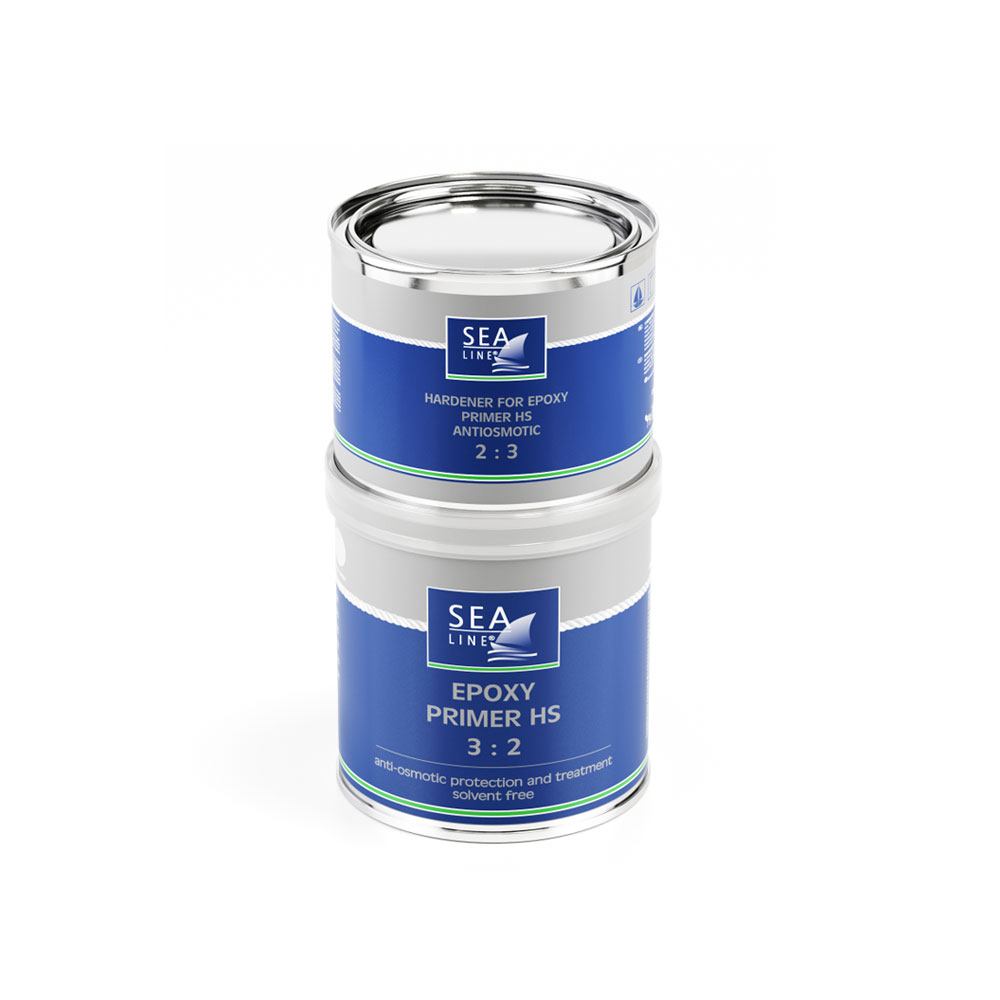
During application with a roller/brush, to improve flow properties, it is permissible to use 0 to 5% of the dedicated thinner for Sea-Line® epoxy systems.
| Type | GRP laminates, steel, aluminium |
| Place | Above and below waterline |
| Function | Filling Antiosmotic |
| Application | brush, roll, spray gun |
| Thinning | Not recommended 0 – 5 % |
| Theoretical coverage For 1l | 6-7 m2 for 150 μm WFT/ 150 μm DFT |
| Number of coats | 1 – 4 |
| Pot life 20°C | 0,45 h |
| Time between layers without sanding | 8 h – 72 h |
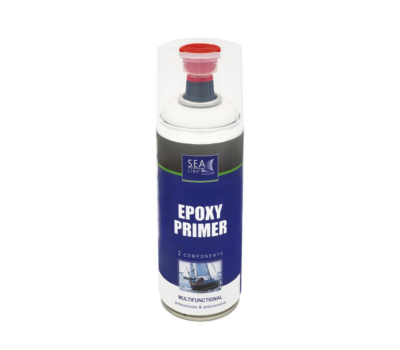
The offered EPOXY PRIMER SPRAY 2K is a 2-component epoxy primer with multifunctional applications. This
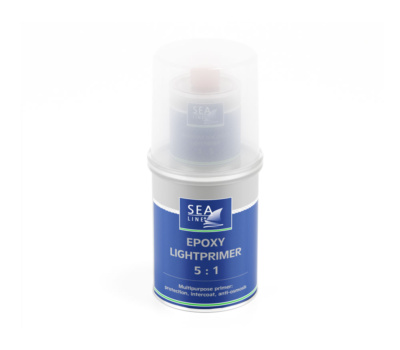
This is a multifunctional paint that protects, enhances adhesion, and also protects against osmosis. Lightprimer
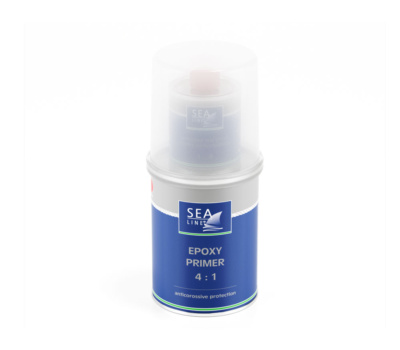
We primarily recommend it for surface corrosion protection. The 4:1 epoxy anti-corrosion primer can be
It is not recommended to apply 2K paints over 1K paints. 1K and 2K inks differ in their composition and properties, including hardness, chemical resistance and durability. 1K paints are one-component and dry by evaporating the solvent, while 2K paints are two-component and need to be cured by adding a hardener. Applying 2K paint over 1K paint can cause unpredictable chemical reactions and lead to undesirable effects such as dulling, chipping or flaking of the paint. Therefore, always use paints according to the manufacturer’s instructions and do not mix different types of paints. farby zgodnie z instrukcjami producenta i nie mieszać różnych rodzajów farb.
Troton Sp z o.o.
78-120 Gościno
Ząbrowo 14A
Polska
Sąd Rejonowy w Koszalinie IX Wydz. KRS 0000187692;
Kapitał zakładowy 8 215 000 PLN


 Facebook
 YouTube
 Instagram
 Guide
Guide Contact
 Newsletter